

Hotel operations
Self-service kiosks or a human welcome at the front desk?
Walk into a hotel lobby in Dubai or Abu Dhabi today and you are just as likely to be greeted by a sleek touchscreen as by a receptionist. UAE properties, from business hotels on Sheikh Zayed Road to beach resorts on the Palm, are rolling out digital check-in to cut queues and free up staff. Guests often love it. But is online registration always the better option, or does the traditional reception desk still have a role to play? This guide weighs both sides so hoteliers and travellers can decide what actually suits them.
The shift
Why UAE hotels are moving to digital check-in
The hospitality sector in the UAE has been one of the fastest adopters of guest-facing technology in the region. Properties want to shorten lines during peak arrival hours, reduce pressure on reception staff, and give guests the kind of self-service experience they already get at the airport. According to the global hospitality industry contactless check-in options expanded sharply after 2020 and have stuck around because guests simply prefer them.
A modern iPad check-in kiosk in a hotel lobby can scan an Emirates ID or passport, read a booking reference, take payment, and dispense a room key card in under two minutes. For a 400-room property handling a wave of 3pm arrivals, that difference adds up fast.
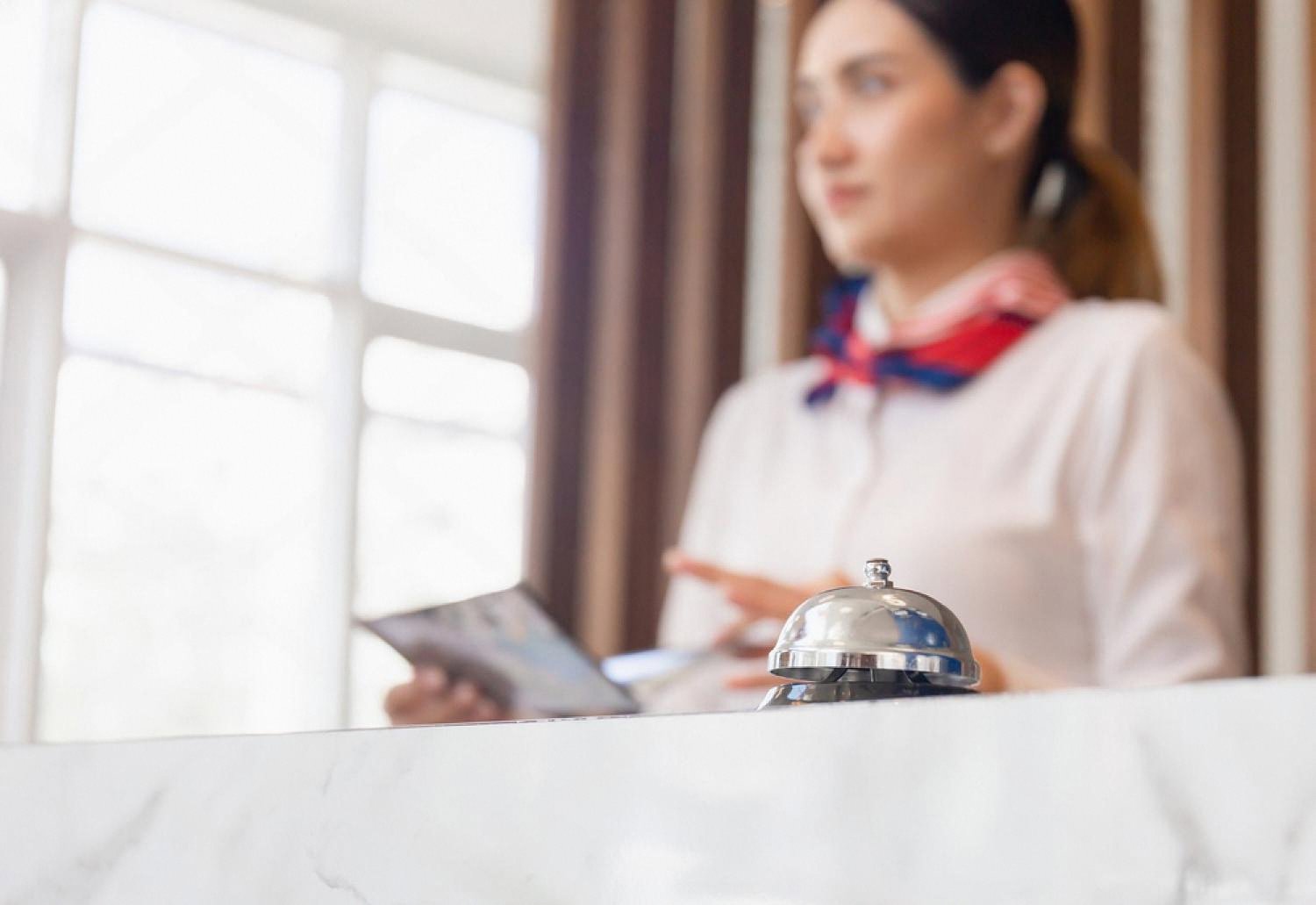
Side by side: self-service kiosks vs the reception desk
Online registration kiosks
- Check-in in under two minutes, no queue
- Available 24/7, including late-night arrivals
- Reads Emirates ID and passports automatically
- Takes AED payment via card or wallet
- Frees staff to handle complex guest requests
- Multilingual interface for international guests
- Lower long-term operating cost per check-in
Traditional reception desk
- Warm, human welcome that defines first impressions
- Easier for elderly guests and families with children
- Handles special requests (room swaps, upgrades) on the spot
- Can calm an unhappy or confused guest in a way a screen cannot
- Needed when booking issues or payment holds appear
- Higher staffing cost, especially overnight
- Queues build quickly during peak arrival windows
Case for kiosks
When online registration is the better choice
Self-service makes the most sense when speed and volume matter more than conversation. Business hotels near DWTC, airport transit properties, and large resorts during the Dubai Shopping Festival all see arrival spikes that a reception desk alone cannot absorb without visible queues.
Guests who travel often, especially business travellers and younger leisure visitors, actively prefer the kiosk. They have their booking on their phone, they want to drop their bag and head out, and they would rather tap through a screen than wait behind a group checking in with multiple questions.
- High-volume properties with concentrated arrival peaks
- Hotels serving frequent business travellers
- Properties with late-night arrivals from long-haul flights
- Apartment-style stays where guests return often
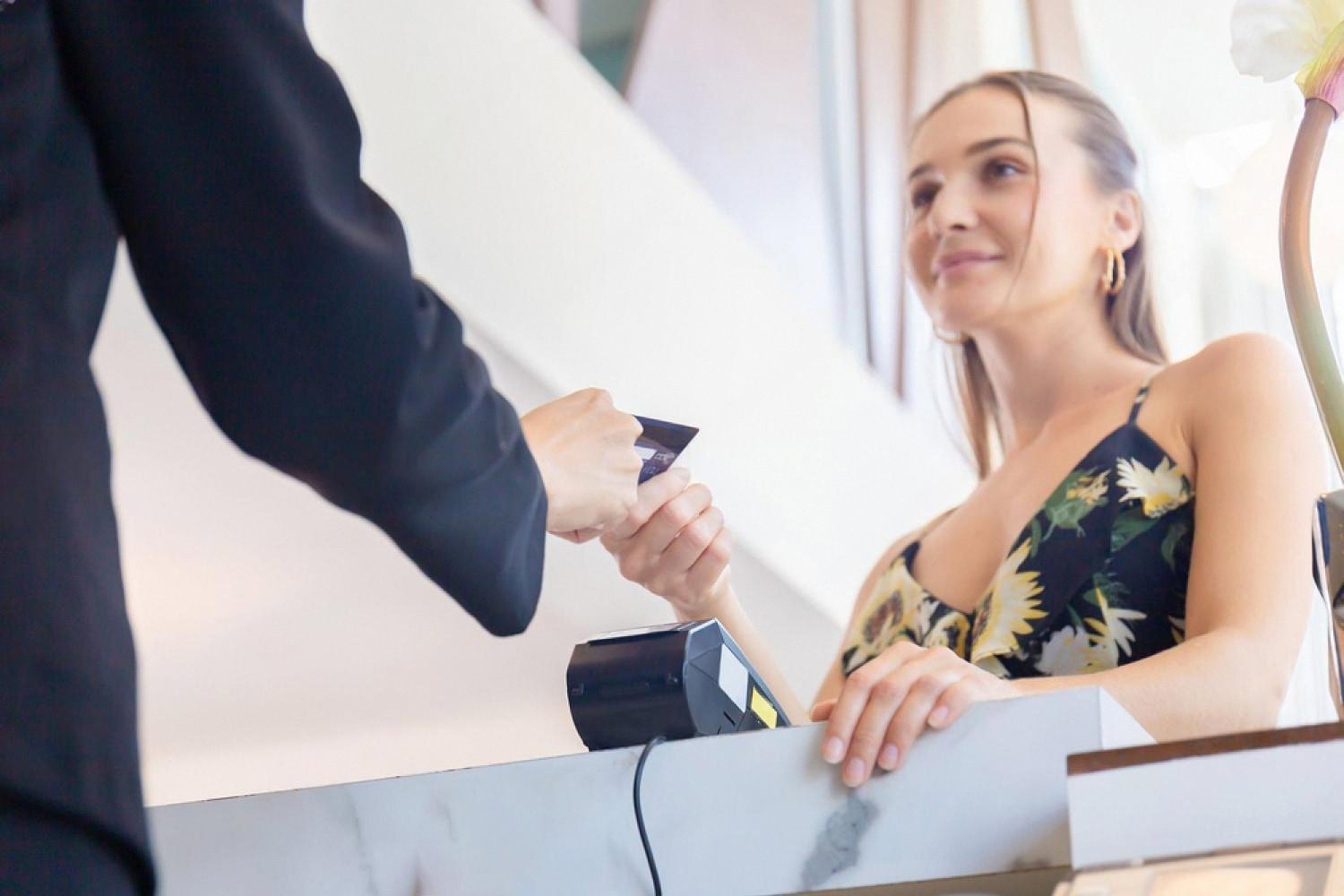
Payment, keys, done
A good kiosk flow collapses what used to be a five-minute desk interaction into a handful of taps, with card payment and key card dispensing built in.
Case for the desk
When the human receptionist still wins
Not every guest wants to work out a touchscreen after a 14-hour flight. Elderly travellers, large family groups, first-time visitors to the UAE, and anyone whose booking has a complication all benefit from a human at the counter. A screen cannot read a tired face and offer a quieter room on a lower floor. It cannot explain, in Arabic or Urdu or Russian, that the shuttle to the mall leaves at 7pm.
Luxury properties in particular treat the welcome as part of the product. At a five-star resort in Ras Al Khaimah or on the Palm Jumeirah, part of what the guest is paying for is being greeted by name with a cold towel and a welcome date. Routing that guest to a kiosk would strip the brand of what makes it premium.
- Elderly guests who are uncomfortable with touchscreens
- Luxury and resort hotels where the greeting is part of the experience
- Guests arriving with booking issues, upgrades, or group reservations
- Travellers who need concierge advice at the moment of arrival
The smartest UAE hotels do not replace the reception desk with a kiosk. They put the kiosk next to it, and let the guest choose.
The honest answer: use both, not one
Framing this as kiosk versus desk is the wrong question. The properties getting it right in Dubai, Abu Dhabi, and Sharjah run both channels in parallel. The kiosk soaks up the easy, high-volume check-ins. The receptionist focuses on the guests who actually need a human: the family with three sleepy children, the business traveller whose booking got double-charged, the elderly couple from overseas who do not want to tap through anything.
The payoff for the hotel is real. Fewer staff are needed at peak times, waiting lines shrink, and the receptionists who remain can give proper attention to the guests in front of them instead of rushing through a line. The payoff for the guest is choice, which is what good service has always been about.
- Keep the desk staffedespecially during peak arrival windows and at night.
- Add one or two kiosks for guests who want to skip the queue.
- Train staff to spot guests who need help with the kiosk and step in before frustration sets in.
- Measure both channels: average check-in time, satisfaction score, and the share of guests choosing each option.
Frequently asked questions
Are self-service check-in kiosks common in UAE hotels?
Yes. Major hotel groups in Dubai, Abu Dhabi, and Sharjah have been installing kiosks over the past few years, especially at airport hotels, business properties, and large resorts. They are rarely the only option, usually sitting alongside a staffed reception desk.
Can a kiosk read my Emirates ID or passport?
Modern kiosks have an integrated scanner that reads both Emirates ID cards and the machine-readable zone of a passport. This satisfies the UAE’s guest registration requirements and removes the need to hand your document to a clerk.
What happens if an elderly guest cannot use the kiosk?
This is exactly why most UAE hotels keep the reception desk open. Any guest who prefers a human can walk straight past the kiosk. Well-trained lobby staff also watch for guests who look unsure at a screen and offer to help.
Does online check-in save the hotel money?
Over time, yes. A single kiosk can process more check-ins per hour than one receptionist and runs 24/7 without breaks. The savings come from needing fewer staff at peak hours, not from firing the front-desk team, who are still essential for complex cases.
Is a traditional reception desk going to disappear?
Unlikely, at least in the UAE. Luxury hotels treat the human welcome as part of the brand, and all hotels need somebody on hand for complaints, special requests, and guests who need real-time help. Expect the desk to shrink, not vanish.
Which option is faster at check-in?
A kiosk is almost always faster for a straightforward booking: scan ID, confirm details, pay, collect key. The desk becomes faster when the booking has issues, because the receptionist can fix things on the spot that a kiosk would simply reject.
Can I check in to a UAE hotel on my phone before I arrive?
Many chains now offer mobile check-in through their app, letting you complete registration before you land. You then collect a key card (or a digital key) at a kiosk or the desk. Policies vary by brand, so check the hotel confirmation email.

Baseball fan, coffee addict, drummer, vintage furniture lover and RISD grad. Doing at the junction of modernism and mathematics to save the world from bad design. Let’s design a world that’s thoughtful, considered and aesthetically pleasing.